The next chapter sounds different
Colin Hauer, Managing Director of Hörbuch Hamburg, on innovation in the audiobook industry

Published: 6 October 2026 | Photo / Video: AI-generated, Magnific
At the start of the 2000s, the world of audiobooks was a completely different place. People listened to them on CD. Digital offerings for the mass market had yet to be conceived. Just a few hundred new titles were published each year across the entire German-speaking world. Today, there are quite a few audiobook publishers that handle such a volume on their own.
That said… not entirely on our own. Rather, together with an ever-growing number of excellent voice-over artists and studios who contribute to this diverse and vibrant landscape.
The enduring popularity of audiobooks not only leads to a significantly wider range of options for listeners – in terms of both the selection of titles available and the providers – but also gives rise to entirely different market dynamics.
In the past, the market was smaller and the barriers to entry were higher – but once you’d produced the right track, it would find its way to an audience. And today?
The past quarter of a century has not only been a particularly successful period for audiobooks, but also one that has been at least as innovative.
The old equation no longer holds
Whatever changes may occur, the cornerstone of an audiobook naturally remains its quality. A superb script, one or more suitable voices, meticulous production and professional editing are irreplaceable. Quality is the cornerstone of our work.
But it is no longer the sole guarantee of attention and relevance. This is not because quality has lost its importance. On the contrary: quality is becoming an increasingly important criterion for clearly distinguishing human-created art from AI-generated content. It has even become an essential prerequisite. The questions, however, of how stories reach their audience, in what situations they are heard, and what additional ways we can create to access them are becoming increasingly complex.
The old formula was often: an excellent book makes for an excellent audiobook. And that’s why people listen to it. This formula isn’t wrong in itself. But over time, a few variables have come into play.
Today, we must also ask ourselves: What can audio do that only audio can do? Which form of presentation suits a story? Which suits its audience? How can we bring an audiobook to life when the product is almost exclusively digital? How do we find our way to the right ears? And what added value is created if we think about audio not just at the end of a book project, but right from the start?
For us at Hörbuch Hamburg, innovation does not therefore mean constantly having to reinvent the audiobook. It means making more consistent use of its potential – with high quality, in keeping with the times and by exploring new avenues.
When audio becomes the starting point
An important step is to view audio as more than just a secondary medium. If an audiobook is conceived solely as an adaptation of an existing book, the benchmark inevitably lies outside the realm of audio. In that case, our main question is: How can we adapt this text into an audio version as effectively as possible?
With audio-only content, the development process begins at a different point. The central question here is which story, which narrative structure and which usage scenario can work specifically for listening. Projects such as the ‘The Mindful Tiger’ audio dramas show that audio need not merely be a form of content exploitation. It can also serve as the starting point for an entirely new product and for a new dimension of a popular brand.
Taken a step further, this means that a standalone audio format also requires its own processes. We don’t just think about the right voice(s). We also consider how sounds open up spaces and how a story unfolds when it is not read, but heard exclusively.
We regularly ask ourselves how we can expand the possibilities of the medium through new forms of staging. In a multi-voice production, different voices, perspectives and roles can create their own dramatic structure. We’re putting this into practice this autumn with Sarah J. Maas’s popular fantasy series ‘Throne of Glass’. What works in a printed book through page layout or shifts in perspective needs to be approached differently in audio. It is precisely here that great opportunities lie: audio is not merely the acoustic manifestation of a text, but a narrative tool with its own rules.
Not every story needs a complex polyphonic structure. But when perspectives and voices are central to a story, we should make the most of these possibilities. Innovation then begins not with the technology, but with the question of what form does justice to the content. The enthusiastic response from our listeners confirms this approach.
New paths are forged through cooperation
Innovation also takes place where audiobooks intersect with other media, locations and cultural forms. To achieve this, we need new, fresh and sometimes surprising perspectives on our work – perspectives to which we are open and which we are keen to incorporate into our projects. This can give rise to exciting projects, such as our collaboration with the Kinderbuchhaus at the Altonaer Museum. There, with our ‘Hörlampe’, we are opening up an acoustic dimension to educational outreach and the promotion of reading. I have already described in my last column how, with our ‘Hörlampe’, we are creating points of contact with digital audiobooks in high-street retail in a completely different context. To explore further perspectives, this winter we’re opening our publishing house to students from the University of Mainz on the Master’s programme ‘Children’s and Young Adult Literature: Book, Market, Media’, to discuss the possibilities of audiobooks with them. I’m particularly keen to hear the perspectives of the next generation of professionals in the industry.
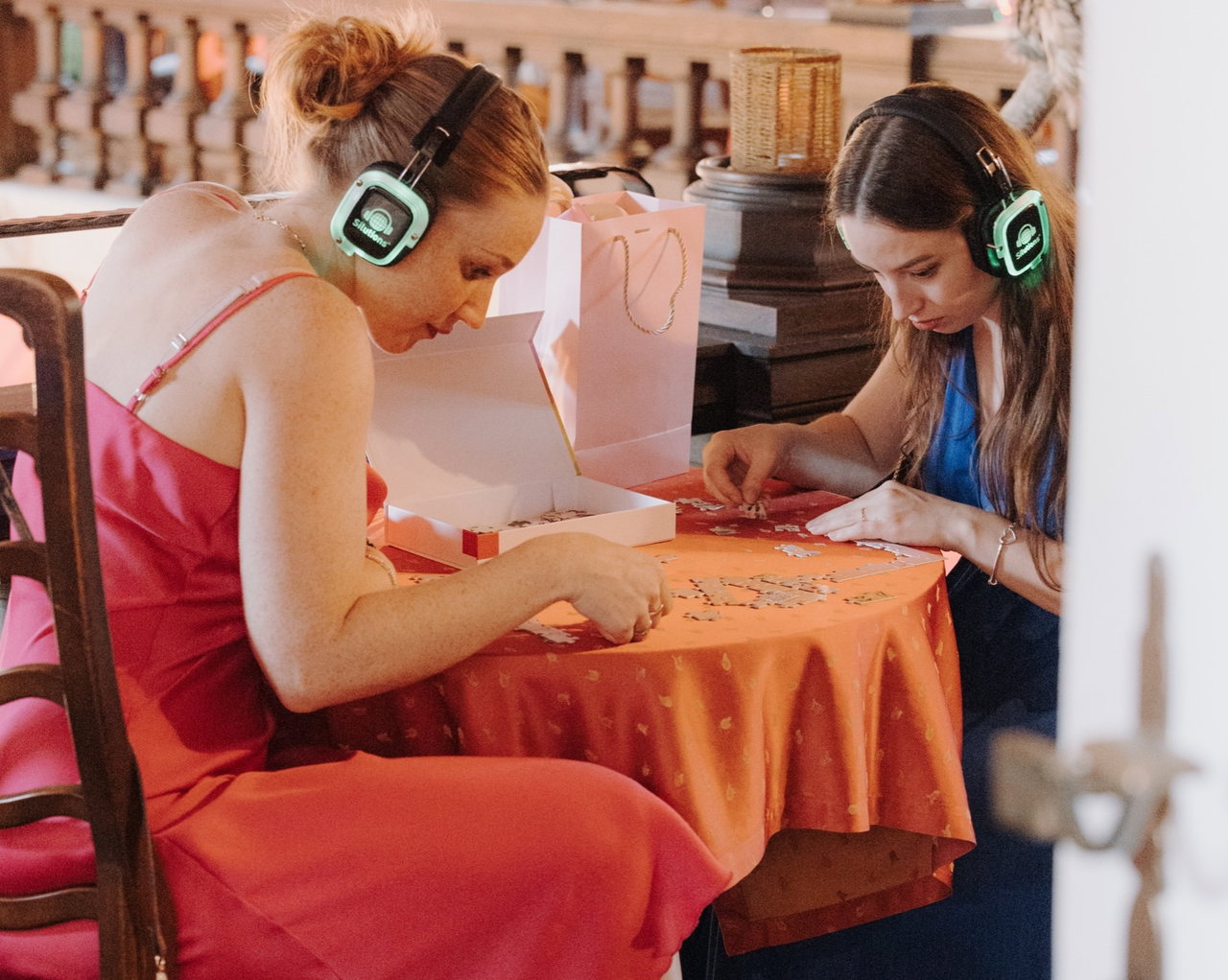
Heard on your own. Experienced together
Colin Hauer (Hörbuch Hamburg) on audio events
Innovation is becoming an organisational priority
In the fast-moving audiobook market, innovation and transformation have always been part of our day-to-day work. Audio-exclusive content and original theme tunes are not, in themselves, anything new. However, we would like to make even greater use of the significant opportunities offered by our medium. I firmly believe in the innovative power and flexibility of the audiobook. To be prepared for future developments and to help shape them, we must create creative spaces and continue to invest in them.
We do not want to be swept along by a market whose output of new products and new platforms continues to rise; instead, we want to continue to help shape its direction. That is why we have been steadily strengthening our team over the past few months, for example in the areas of Digital Innovation, Content Innovation and New Markets. As before, the focus here is on the latest technical possibilities, but also on new content-based approaches with which we can inspire our listeners – entirely in keeping with our tradition of reinvention.
A publishing house that wishes to break new ground must be able to examine and evaluate these new avenues and pursue them in the long term.
A clear direction rather than knee-jerk reactions
Precisely because so much is changing so quickly, it is important not to jump on every bandwagon. Not every new technology solves a problem. Some even create new ones. Not every new format adds value. And not every development that attracts attention is automatically good for audiobooks or makes sense.
We therefore need new tools: data and market analysis, technical expertise, discussions with our partners, a close connection with our listeners – and, last but not least, a willingness to try new things. However, we also need the ability to filter out the key insights from the multitude of signals.
For me, innovation does not necessarily mean always having to be the first to jump on every trend. Innovation means staying curious, making well-informed decisions and having the courage to stray from the beaten track when it no longer leads to the goal.
Hörbuch Hamburg will not blindly follow every trend, nor will it head straight into every storm that looms on the horizon. We want to provide guidance. After all, a lighthouse is not characterised by the fact that it moves about a great deal. It stands firm, provides guidance and shows the way.
This is particularly true when it comes to competing for attention. People’s time is limited. This makes it all the more important today to earn your listeners’ time in a lasting way: through relevant content, high quality, modern approaches and experiences that stick in the memory.
When I look back at our recent projects, I don’t see a loose collection of individual innovations and good ideas. I see attempts to view the audiobook from different perspectives: as a standalone audio format, as a special production, as part of a collaboration, and as a starting point for new forms of interaction.
Not every attempt has to be an instant hit. What matters is that we learn something every time: what works for which target audience? Perhaps even more importantly: what doesn’t work at all? Which idea holds people’s attention beyond that initial moment?
We are still a long way from having all the answers to these questions. That would probably not be a good sign either. A company that considers itself to have ‘arrived’ in such a rapidly changing industry has stopped listening carefully and thinking about the future. I cannot foresee what that very future holds for the audiobook. But I am certain of one thing: if today’s – and tomorrow’s – audiobook creators continue to work with the same curiosity, innovative spirit and passion as they have done so far, then we can look forward to many shining beacons that will make all the gathering rain clouds fade away.
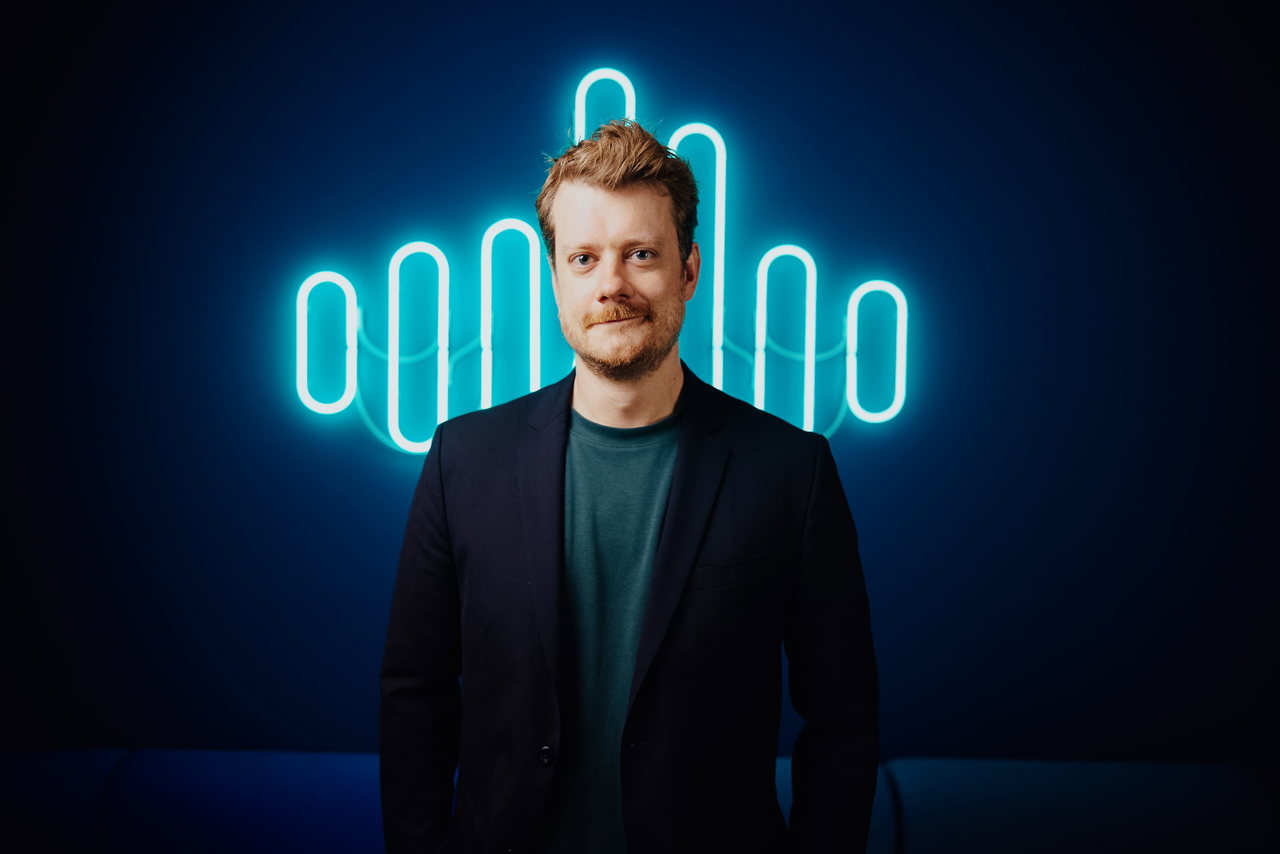
Colin Hauer is the managing director of Hörbuch Hamburg Verlag. He has been working in the audio industry for over 18 years and, in addition to roles at Amazon, Bastei Lübbe, Bookwire, Sony Music and Universal Music, has advised several publishers and subscription services on the development of their digital strategies. In addition to an MBA from Mannheim Business School, Hauer holds an MA in Creative Industries Management and a BA in Music Business.