"Nearly six in 10 Spotify users have now tried an audiobook"
A conversation of Nathan Hull with Spotify’s Duncan Bruce in the lead-up to Audio @BolognaBookPlus
Published 14.4.2026 | Foto: Spotify
As the boundaries between music, podcasts, and literature continue to blur, Spotify has transitioned from a new entrant to a formidable force in the global book market. Since the launch of its "Audiobooks in Premium" offering, the streaming giant has scaled with dizzying speed—expanding to 22 markets and growing its library to over 700,000 titles in just two years.
But for Spotify, the strategy isn't just about volume; it’s about ecosystem integration. From technical innovations like "Page Match" and "Recaps" to strategic partnerships with Bookshop.org, the platform is attempting to redefine "reading" as a fluid, format-agnostic experience that follows a listener from their morning commute to their bedside table.
In the lead-up to the Audio @BolognaBookPlus forum, Nathan Hull, Chief Strategy Officer, Beat Technology (Norway), who has curated the new Audio Forum at BolognaBookPlus, sat down with Duncan Bruce of Spotify to discuss the platform’s rapid uptake, the data driving their market expansion, and the delicate balance of integrating AI into the creative process. In this wide-ranging interview, Bruce outlines a vision where audio doesn't just compete for a listener's time—it "grows the pie" for the entire publishing industry.
Spotify expands audiobook features internationally
Spotify recently announced a raft of new markets where audiobooks are now available. What does the initial uptake look like?
We’ve been really encouraged by the response, both in our newer markets and when we take a step back and look at the bigger picture. Audiobooks in Premium is still only just over two years old, and in that time we’ve expanded to 22 markets and grown our catalogue nearly fivefold, from 150,000 to more than 700,000 titles.
What that progress shows is that when you make audiobooks easy to access and discover, you can drive impact at scale. We’re bringing new audiences into books through a platform millions of people already use every day for music and podcasts, and nearly six in 10 eligible Spotify users have now tried an audiobook.
Across markets, we’re seeing encouraging signals of both audience growth and engagement, in both more established audiobook regions and those that are earlier in their development. In the Nordics, where we’ve only been live for just over 100 days, we’ve already doubled the size of our catalogue.
Which factors dictate which new markets you look at?
We look at markets where we believe Spotify can create meaningful value for listeners as well as authors and publishers. That starts with the listener. We ask ourselves where we can make audiobooks more accessible and easier to discover for the millions of people already using Spotify every day for music and podcasts.
We also look at where we can help grow the market for authors and publishers by reaching new audiences and increasing engagement with books. In some cases, that means established audiobook markets where there is already strong demand. In others, it means earlier-stage markets where there is a clear opportunity to expand listening and bring more people into the category.
And finally, we look at where audiobooks can add real value to the Spotify Premium experience, making the subscription an even richer destination for audio.
So the decision is really about identifying markets where we believe our model can grow the pie for everyone involved.
"We see the future of reading as more fluid, flexible and connected across formats"
Alongside this you have been busy with new technical features and initiatives, from charts to bookshop.org and page match to recaps … What has the response been like to these from the publishing community and your users?
At Spotify, we see the future of reading as more fluid, flexible and connected across formats. And when we talk about reimagining the reading experience, that’s really what we mean: creating products and experiences that make it easier for people to discover books and engage with them in ways that fit their lives – whether that’s reading a physical or ebook or listening to an audiobook, or both, depending on what format best suits the moment. Ultimately, that gets people engaging with books more and grows readership for the industry.
That thinking is reflected in the way we’re evolving the product. Some of our work is focused on making it easier for people to move between formats in a way that feels natural. Page Match, for example, helps readers move seamlessly between a physical or ebook and its audiobook counterpart, while our integration with Bookshop.org is designed to make it easier for users to go from discovering a book on Spotify to purchasing a physical copy. Together, they reflect our view that audio and physical books can work hand in hand.
Other areas of focus are around discovery and helping people stay connected to stories over time. Features like Audiobook Charts help surface what’s resonating with listeners, while Recaps work a bit like the “previously on” section of a TV episode, helping listeners quickly catch up on what happened the last time they engaged with a book so they can jump back into the story more easily.
From the publishing community, the response has been positive because these features support the same broader goals publishers care about too: discovery, engagement and helping people build lasting habits around books. They’ve also been developed in close collaboration with publishers and authors, which has been essential in shaping products that respond to real needs across the ecosystem. And from users, we’re seeing clear interest in tools that make the experience feel more intuitive, whether that’s helping them find their next listen, return to a story more easily or move more naturally between audio and print. We’ve seen that those who have used Page Match on average consume up to 60 % more audiobook hours each week than the average audiobook listener.
How does Spotify’s development roadmap for audiobooks get decided?
A lot of it comes down to identifying where we can remove friction for listeners and create more value for the wider ecosystem.
We look closely at how people are engaging with books on Spotify. Getting people to try an audiobook for the first time, and make the experience more intuitive or more useful, to help build a more habitual audiobook listener.
Some of that is about discovery, some of it is about helping people stay engaged with a story over time and some of it is about making it easier to connect different formats and experiences.
At the same time, we build in close collaboration with publishers and authors. Their input is a big part of how we think about the roadmap because the best ideas tend to come from a real understanding of what readers and the industry need.

Recaps is much like a “previously on” feature for TV.
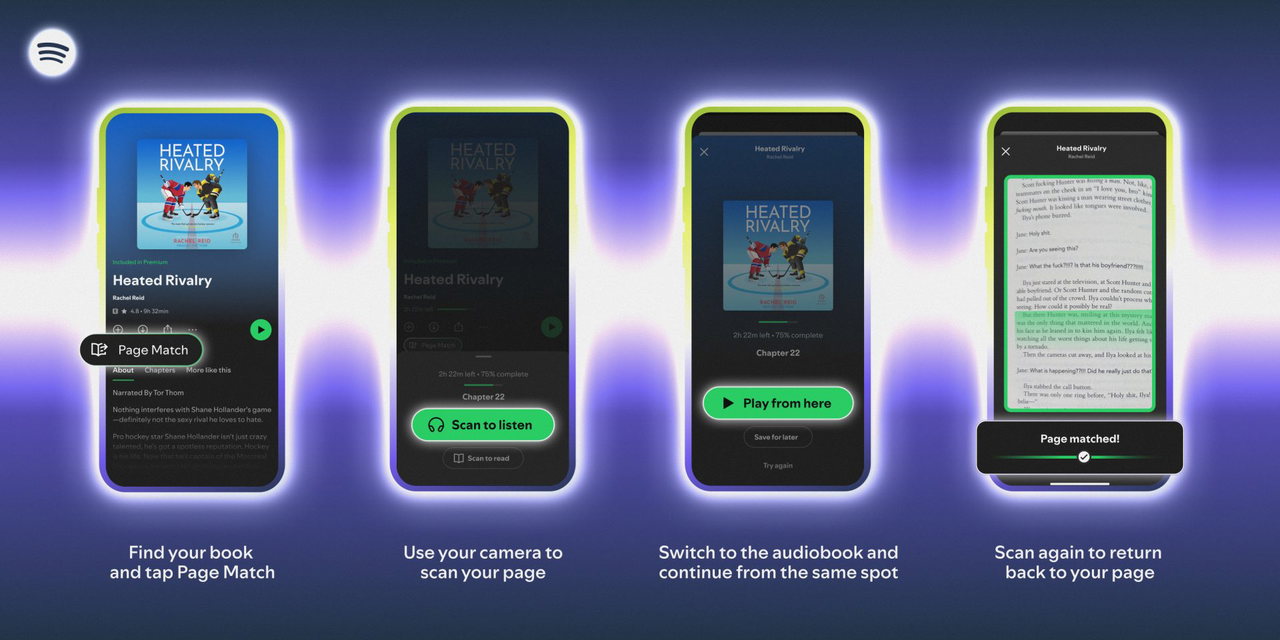
Page match lets users switch between a print book or e-book and its audiobook counterpart with a quick scan of the mobile phone camera.
"Audio can be an entry point into reading more broadly"
What excites you most currently about audio in the publishing industry?
One of the most exciting things about audio is its ability to meet people where they are, fitting naturally into everyday moments like commuting, exercising or simply being on the go. It creates more opportunities for books to become part of daily life. In a doom-scrolling world, there are countless ways for people to lose time to screens. At Spotify, we work toward the idea that every session should feel worthwhile, not a drain, leaving you feeling more energised, more inspired and more in control. Audio has a powerful role to play in that.
Audio can also be an entry point into reading more broadly, especially for younger audiences who may not previously have engaged with books at scale. As I mentioned earlier, we believe the future of reading is more personalised, flexible and seamless, allowing books to move with readers as their day changes and as they shift between formats. Audio can help people build lasting reading habits and connect with stories across formats. As more listeners come into the category, there is an opportunity to drive sustained engagement and long-term growth for authors and publishers.
With the advent of all things AI and the rapid change of pace in content creation, translation, text-to-speech quality, effects on rights etc – what do you see as your fundamental challenges and opportunities?
At Spotify, we see technology as something that should help more creators reach wider audiences. That’s been true across the platform for years. Our investments in AI and machine learning have helped make Spotify a highly personalised experience, powering discovery and connecting users with the right content at the right time. In books, we see a similar opportunity for AI to be additive, helping more authors and publishers have their books heard.
In audiobooks specifically, one of the clearest opportunities is lowering barriers to entry for production. We recognise that for many publishers and authors, the cost of creating audiobooks can be prohibitive. If AI can help lower those barriers and bring more books to more people, that can be very positive for the industry. That’s especially important in markets where there is still a wide gap between the number of books available in print or ebook and those available in audio.
At the same time, our approach has to be grounded in transparency, close partnership with rights holders and clear labelling for users – all DVN titles are clearly labelled as such. We are also committed to not using audiobook content for LLM training or voice cloning without consent. Those principles are essential to building trust as the technology evolves.
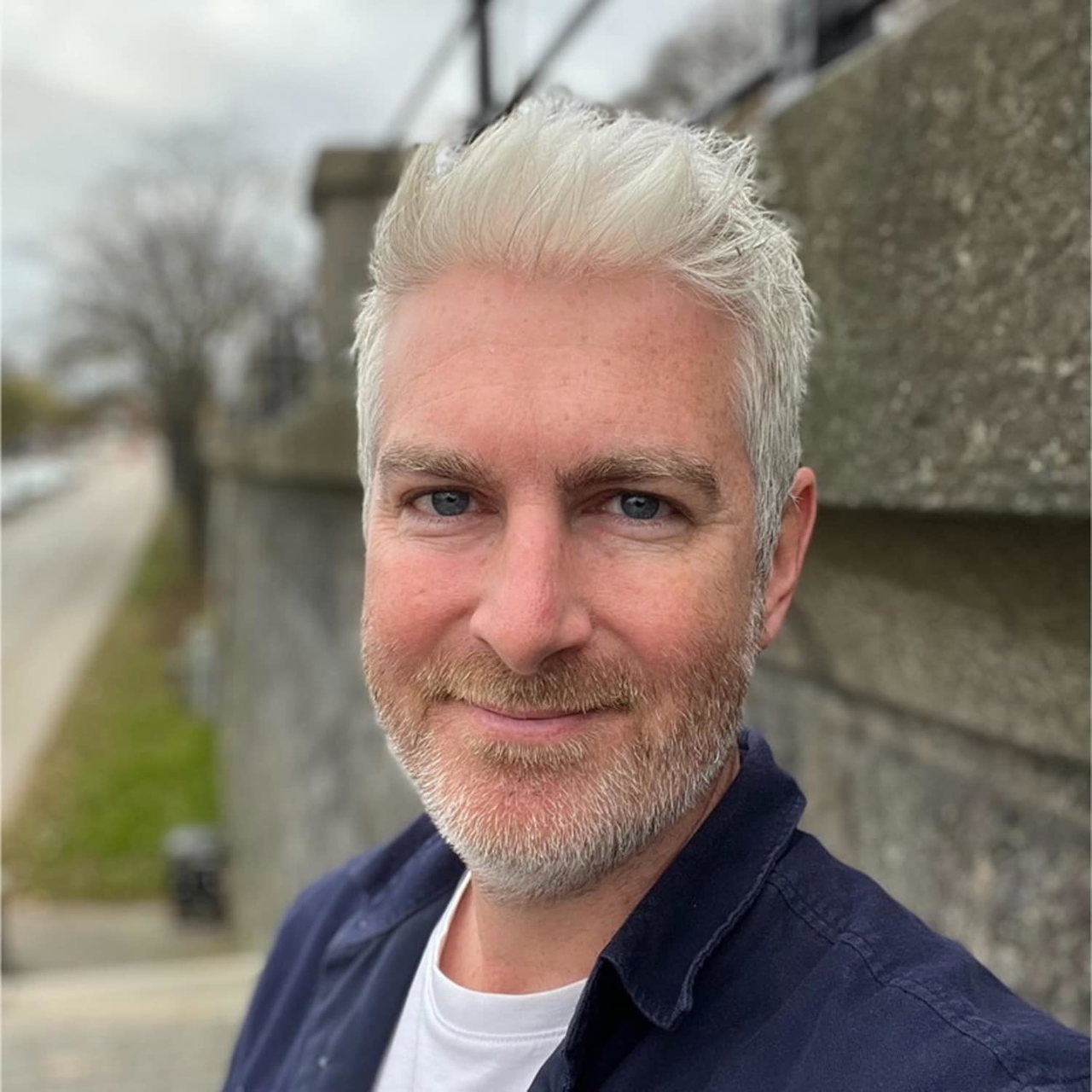
Duncan Bruce is Director of Audiobooks International at Spotify. Previously held leadership roles at Audible and specializes in expanding digital audio markets globally.
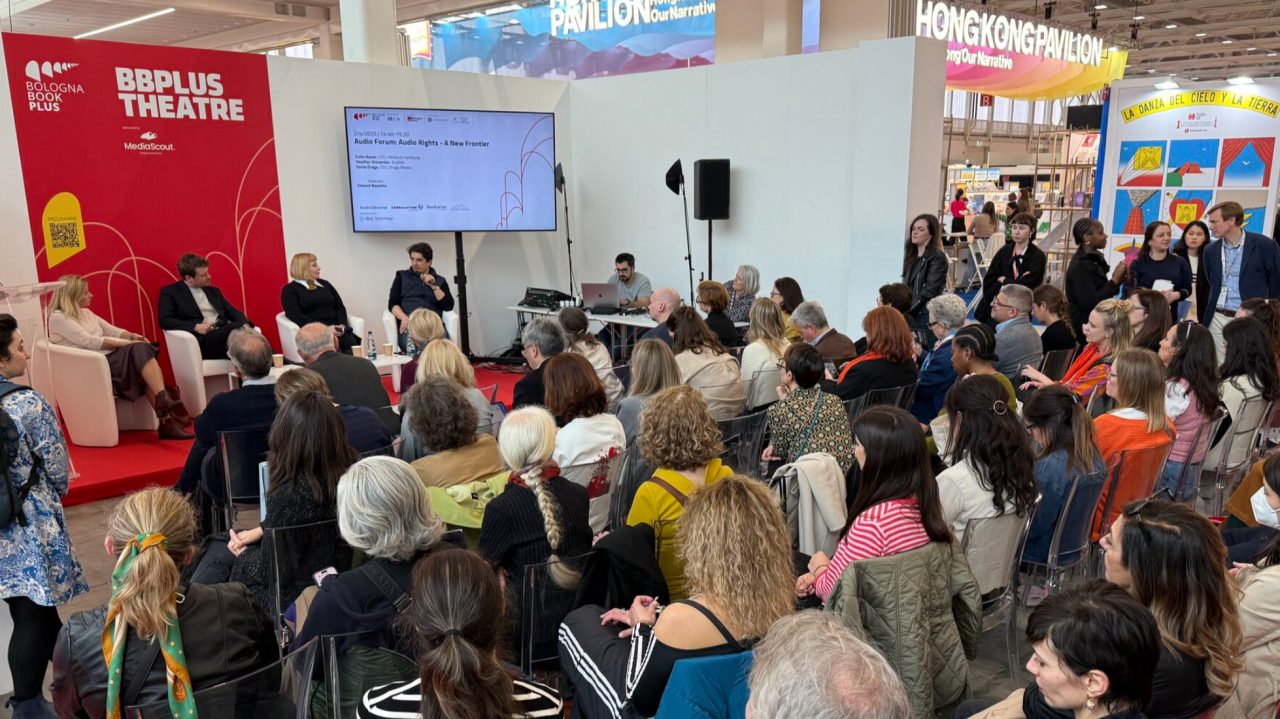
Photo Nathan Hull
Audio @BolognaBookPlus
This year’s Audio Forum’s programme at Bologna book fair will examine how technology, creativity, and commercial realities are reshaping how stories are produced, distributed, and consumed. The Audio Forum 2026 is sponsored by ElevenLabs, Bookwire, and Zebralution. It takes place Wednesday 15 April 2026 in the BolognaBookPlus Theatre. The event starts with a a keynote conversation with Duncan Bruce, Spotify, offering insight into the platform’s approach to audio growth, audience engagement, and the future of spoken-word content.